A small white spot, bleeding gum, or change in the way a child bites can appear before pain, infection, or difficulty eating. Knowing when to book a routine consultation, what the clinician checks, and which symptoms need prompt attention helps you act while treatment is simpler and less disruptive.
Key takeaways
- Book the first visit by age 1 or within six months of the first tooth.
- Return at the interval your clinician recommends based on decay risk.
- Ask about brushing, fluoride toothpaste, diet, teeth grinding, and thumb sucking.
- Seek prompt care for tooth pain, swelling, fever, or a dental injury.
Why an early checkup can stop decay from becoming an emergency
An early visit changes the problem from something hidden into something manageable. The first dental consultation is recommended by age 1, or within six months after the first tooth erupts—not after all primary teeth appear. This early dental checkup for children establishes a dental home and identifies risk before decay reaches the nerve.
A clinician can spot white-spot demineralization, enamel defects, plaque buildup, or a vulnerable molar groove before a visible cavity causes trouble. The consultation also reviews bottle and cup use, snack frequency, sugary drinks, brushing, fluoride exposure, medicines, and family history.
That information guides prevention, including fluoride varnish for children under 6 at increased caries risk and sealants when an erupted molar is suitable.
Untreated decay can lead to:
- Toothache that disrupts eating and sleep
- Infection requiring urgent treatment
- A filling, pulp treatment, or extraction
- Early loss of a primary tooth
Primary teeth hold space for permanent successors, so losing one early can affect eruption and alignment. A space maintainer is not automatic; the decision depends on the tooth, timing, eruption stage, and bite.
Understanding how pediatric dental consultations help prevent bigger problems means acting while prevention or a small repair remains possible, rather than waiting for pain to announce a larger one.
When to book the first visit and when to return
Book an early dental checkup for children by age one, or within six months after the first tooth erupts. Do not wait until all primary teeth appear. This first visit establishes a dental home and starts prevention before a small concern becomes extensive decay.
Low-risk children commonly return about every six months. Higher caries risk often calls for reviews every three to six months, with the clinician setting the exact interval. Arrange an earlier review for any of these:
- A white, chalky, brown, or broken area on a tooth
- A cavity, previous filling, or enamel defect
- Frequent sugary drinks or snacks, or limited fluoride exposure
- A dry mouth linked to medication or a medical condition
- Difficulty brushing, developmental needs, or a strong family history of cavities
- Pain, facial swelling, fever, or dental injury
At each consultation, share changes in the child’s daily routine and health history so the recall plan can be adjusted. Radiographs are not automatic; the clinician orders them when symptoms, examination findings, development, or caries risk make an image likely to change care.
For children younger than six with increased caries risk, ask about fluoride varnish after tooth eruption; the U.S. Preventive Services Task Force recommends at least one application. These are practical benefits of pediatric dental consultation: matching follow-up and prevention to risk instead of relying on a fixed schedule.
What the clinician checks during a child oral health consultation
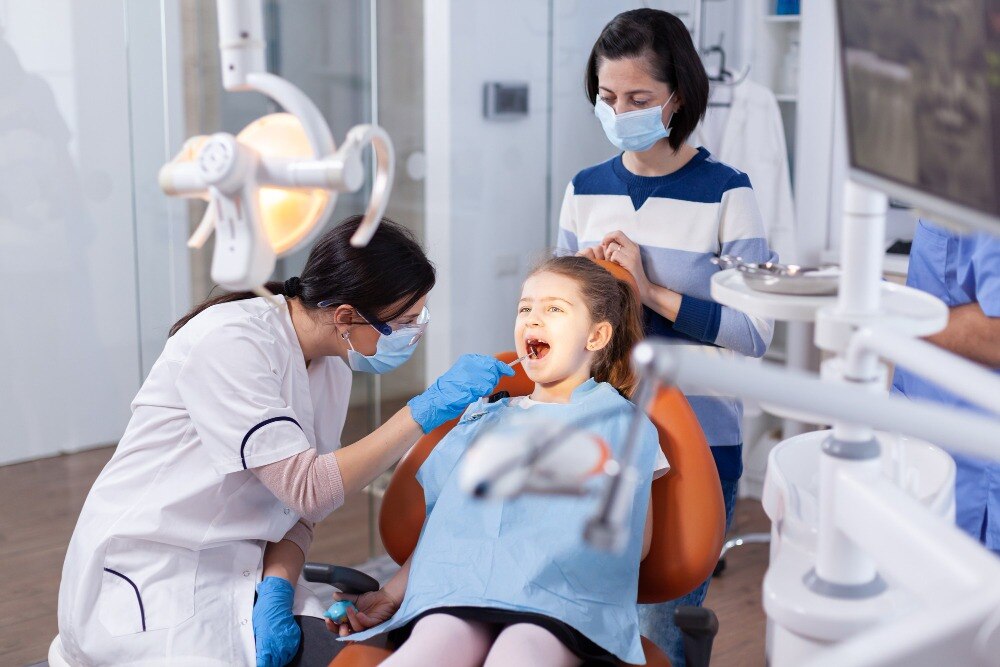
A clinician begins by asking about feeding, bottle or cup use, snack and drink frequency, brushing, fluoride exposure, medicines, family caries history, and medical or developmental conditions. These answers reveal risks that a quick look at the teeth can miss and help set the child’s recall interval.
During the examination, the clinician checks:
- Teeth for plaque, white-spot lesions, cavities, enamel hypoplasia, discoloration, chips, cracks, and other developmental defects.
- Gums and soft tissues for redness, swelling, bleeding, ulcers, unusual lumps, and signs of infection.
- Eruption for missing, delayed, displaced, crowded, or poorly positioned teeth.
- Bite and jaw movement for crossbite, open bite, increased overjet, shifting contacts, and changes caused by growth or habits.
- Breathing and oral posture for persistent mouth breathing, dry mouth, snoring concerns, thumb-sucking, pacifier use, and changes to the palate or front-tooth position.
- Trauma for loosened, pushed-in, darkened, fractured, or tender teeth, including injuries parents may not have noticed.
The clinician also reviews plaque control and cavity risk, then decides whether the next step is coaching, fluoride treatment, monitoring, restoration, or referral. Findings involving the airway, feeding, speech, development, or soft tissue may need medical or specialist follow-up rather than immediate orthodontic treatment.
These are practical benefits of pediatric dental consultation: documenting change early and choosing the right response.
What parents can change before the next appointment
After a child oral health consultation, change the daily habits that keep exposing teeth to sugar or plaque. Offer water between meals, avoid putting a child to bed with a bottle of milk or juice, and limit sweet snacks and drinks to mealtimes.
| Decision | Lower-risk choice | Problem it helps prevent |
|---|---|---|
| Feeding | Use an open cup when ready; avoid frequent sipping of juice or sweetened drinks | Repeated acid attacks and early decay |
| Brushing | Brush twice daily with fluoride toothpaste; use a smear from eruption to age 3 and a pea-sized amount from ages 3 to 6 | Plaque buildup and missed tooth surfaces |
| Fluoride | Tell the clinician about drinking water and toothpaste exposure; accept fluoride varnish when the risk assessment supports it | Weakened enamel and cavities before they cause pain |
| Preventive treatment | Follow the advised recall, sealant, or varnish schedule instead of waiting for symptoms | Small lesions becoming extensive treatment |
Parents should supervise brushing because young children swallow toothpaste and cannot clean every surface reliably. Do not start or skip fluoride supplements, varnish, or sealants without advice based on the child’s age, cavity risk, and total fluoride exposure.
Bring the child’s medication list, medical and developmental history, previous dental records, details of pain or trauma, the toothpaste used, and information about bottles, cups, snacks, and sugary drinks. These details make an early dental checkup for children more useful and help the clinician set a practical prevention plan.
Routine monitoring or prompt care: how findings guide the next step
A child without pain can still need a routine preventive consultation. Stable teeth, mild plaque, early enamel changes, thumb-sucking, mouth breathing, or delayed eruption usually call for examination, coaching, monitoring, fluoride decisions, or planned referral—not same-day treatment.
Book prompt dental care for severe or worsening pain, facial or gum swelling, fever, pus, uncontrolled bleeding, a broken tooth, or a tooth knocked out after an injury. Difficulty breathing or swallowing is an emergency; seek immediate medical care. Do not wait for a routine slot.
Use the finding to choose the next step:
- Routine monitoring: Attend the scheduled child oral health consultation when the child is comfortable. Ask when to return and which change—pain, swelling, a dark spot, sensitivity, or altered eating—should move the appointment forward.
- Prompt dental appointment: Contact a dentist quickly for persistent pain, a visible cavity with food trapping, gum swelling, or a chipped tooth that cuts the cheek. Early treatment can prevent infection and extensive treatment.
- Injury review: Arrange urgent assessment after a fall or blow, even if the tooth looks intact. The clinician can check looseness, displacement, soft-tissue injury, and damage beneath the surface.
- Coordinated care: In Swargate, Chordiya Clinic can examine the child, discuss findings with the caregiver, arrange treatment, and refer concerns such as complex trauma, eruption problems, airway-related findings, or developmental issues to the appropriate specialist.
These are practical benefits of pediatric dental consultation: matching the response to the finding instead of treating every visit as an emergency.
Related service
Consultation Consultation we shall be addressing to your chief complaints and associated health related queries. |
Frequently asked questions
When should a child have a first dental checkup?
Book the first visit by age 1, or within six months after the first tooth erupts.
How often should a child return for a dental consultation?
Return at the interval recommended by the clinician after reviewing your child’s decay risk and oral health.
What does a child oral health consultation include?
The clinician checks teeth and gums, looks for early decay and bite concerns, reviews habits and diet, and assesses oral hygiene.
When does a child need prompt dental care?
Arrange prompt care for tooth pain, facial or gum swelling, fever linked to a tooth, uncontrolled bleeding, or a dental injury.
Keywords