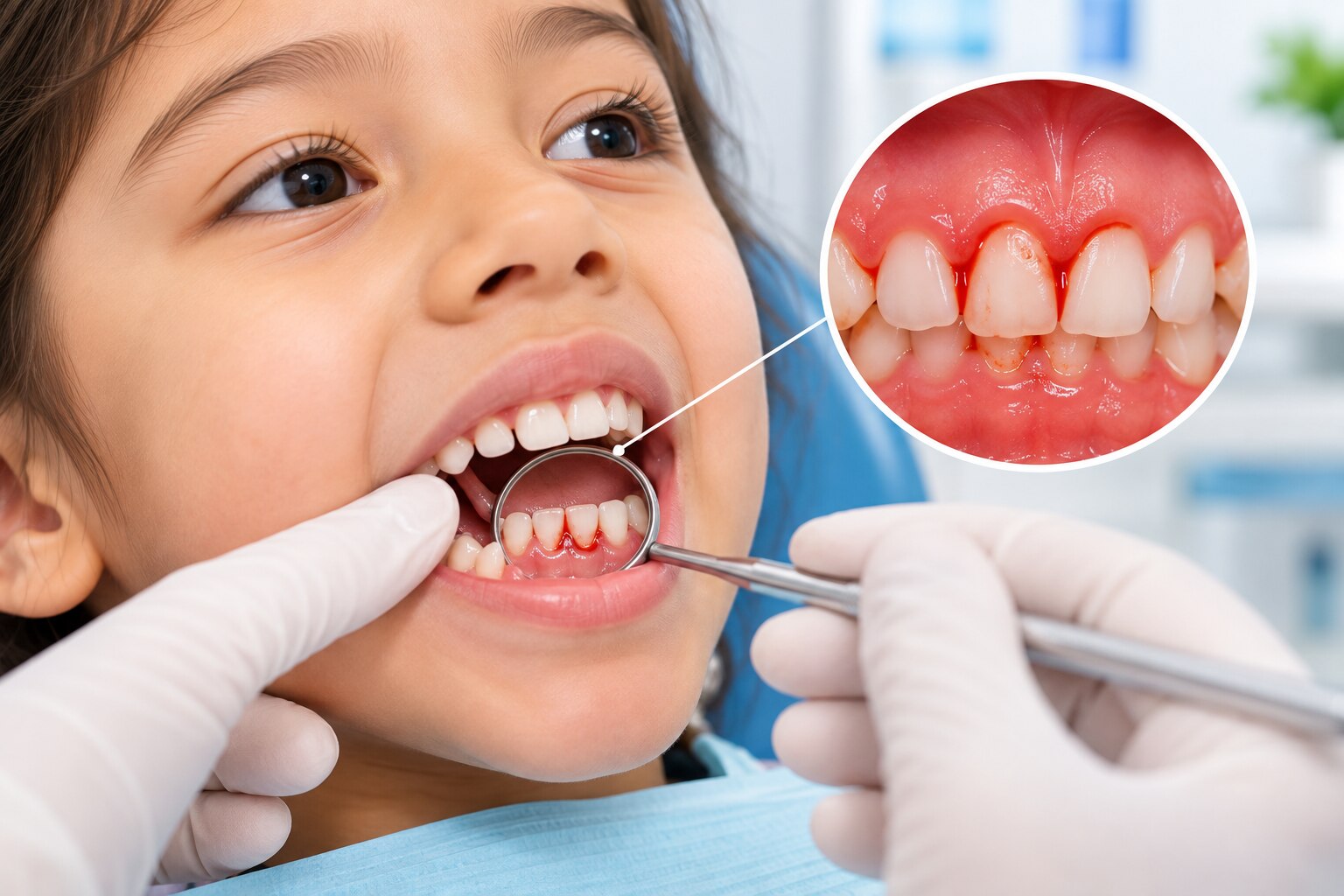
A small streak of blood after brushing can come from inflamed gums, an erupting tooth, or a cleaning injury, but repeated bleeding needs attention. You will learn how to identify likely causes, respond safely at home, recognise urgent warning signs, and decide when to book a dental or medical assessment.
Key takeaways
- Brush gently with a soft toothbrush and fluoride toothpaste; do not stop cleaning.
- Arrange a dental visit for repeated bleeding, swelling, pain, or persistent bad breath.
- Seek urgent care for uncontrolled bleeding, facial swelling, fever, or breathing difficulty.
- Record when bleeding started, affected areas, brushing habits, medicines, and other symptoms.
What Causes a Child’s Gums to Bleed?
Plaque-related gingivitis is the most common cause: bacteria irritate the gumline, making it red, swollen and prone to bleeding. Brushing with too much force, snapping floss into the gum, or food stuck between teeth can injure one area. Mouth breathing can dry and irritate the gums, while braces and other orthodontic appliances can trap plaque.
| Cause | What happens | Clues to look for |
|---|---|---|
| Erupting tooth | Plaque collects under the gum flap, especially around a partly erupted molar | Bleeding near one new tooth, tenderness or bad taste |
| Diet-related problem | Severe vitamin C or vitamin K deficiency can affect gum or blood-clotting function | Poor diet plus widespread bleeding or other symptoms |
| Medicine effect | Some medicines enlarge or inflame gums, including certain seizure medicines and calcium-channel blockers | Gum swelling beginning after a medicine change |
| Medical condition | Diabetes, immune-system disorders, or platelet and clotting disorders can increase bleeding risk | Easy bruising, nosebleeds, pallor, tiredness or bleeding elsewhere |
| Infection or injury | An abscess, ulcer, fall or sharp object damages tissue | Pus, fever, severe pain, swelling or a loose tooth |
Bleeding is not proof of a vitamin deficiency or blood disorder. Parents searching for kids gum problems swargate should share the child’s full medical and medication history with a clinician and never stop a prescribed medicine without medical advice.
Persistent bleeding, swelling or pain needs a dental assessment rather than an assumption that eruption caused it.
When Is Bleeding Mild Irritation and When Is It a Warning Sign?
Bleeding from one gum spot after vigorous brushing or a flossing slip is usually mild if it stops within a few minutes and does not return. A small sore area without swelling, pus, fever, loose teeth, or ongoing pain supports minor injury.
Initial bleeding can also occur when inflamed gums are cleaned for the first time, but it should decrease with gentle daily care.
Arrange a dental assessment if you notice:
- Bleeding without brushing, flossing, or another clear injury
- Bleeding that continues, returns repeatedly, or affects several areas
- Bright-red, swollen, tender gums; pus; persistent bad breath; or mouth ulcers
- Bleeding around one erupting molar that persists, hurts, swells, or causes a bad taste
- Unexplained bruises, nosebleeds, or bleeding from another body site
- Gum bleeding in a child with diabetes, an immune-system disorder, or a medicine that changes the gums
Sudden facial or gum swelling, fever, rapidly worsening pain, difficulty swallowing or breathing, inability to open the mouth normally, uncontrolled bleeding, or a significant mouth injury needs urgent medical care rather than a routine appointment. Do not stop a prescribed medicine without medical advice.
When choosing a child bleeding gums dentist, confirm that the clinician examines the teeth and gums, reviews the complete medical and medication history, and provides a follow-up plan. A cleaning alone cannot distinguish gingivitis, trauma, eruption-related inflammation, an abscess, or a medical bleeding problem.
What to Do at Home Without Making the Gums Worse
Keep cleaning the teeth twice a day; stopping around a bleeding gum leaves plaque in place and can prolong inflammation. Use a soft-bristled toothbrush, fluoride toothpaste, and light pressure, angling the bristles towards the gumline rather than scrubbing back and forth.
Use this checklist during the first episode:
- Brush gently around the bleeding area. Do not dig under a gum flap covering an erupting molar.
- If bleeding follows brushing or flossing, have the child bite on clean gauze for 10 minutes without repeatedly checking it.
- Use floss or an age-appropriate interdental cleaner where teeth touch; a toothbrush cannot clean that contact point.
- Give children under 3 a smear of fluoride toothpaste and children aged 3 to 6 a pea-sized amount. Supervise children who cannot reliably spit.
- Avoid hydrogen peroxide, alcohol-based mouthwash, vigorous rinsing, and aspirin on the gum.
- Do not stop a prescribed medicine because bleeding started. Tell the dentist every medicine and supplement the child takes.
A small brushing or flossing injury should settle after gentle pressure. Arrange an examination if bleeding continues despite careful twice-daily cleaning, or if the gum remains swollen, painful, foul-smelling, or produces pus. Do not assume bleeding around one erupting tooth is harmless when it persists.
Which Symptoms Need a Dentist, Doctor, or Emergency Care?
Arrange a dental appointment if bleeding continues despite careful twice-daily brushing, starts without brushing, or comes with swollen or bright-red gums, recession, pus, persistent bad breath, pain, mouth ulcers, or a loose tooth.
Bleeding around one erupting molar can result from plaque under the gum flap, but persistent bleeding, pain, swelling, or a bad taste still needs an examination.
| Situation | What to do | Warning signs |
|---|---|---|
| Routine dental appointment | Book a prompt examination | Repeated bleeding, inflamed gums, pain, bad breath, pus, recession, or a loose tooth |
| Urgent medical assessment | Contact a doctor promptly | Easy bruising, frequent nosebleeds, unusual tiredness, pallor, fever, recurrent infections, or bleeding from several body sites |
| Emergency care | Go now or call emergency services | Uncontrolled bleeding, facial swelling affecting breathing or swallowing, inability to open the mouth normally, rapidly worsening pain, or significant mouth injury |
Do not assume bleeding proves a vitamin deficiency or blood disorder, and do not stop a prescribed medicine because the gums bleed. Children with diabetes, immune-system disorders, or medicines that alter gum tissue need their full history reviewed.
A search for bleeding gums child dentist in Swargate should lead to a clinician who treats children, examines teeth and gums, reviews medical history, and gives a follow-up plan—not only a cleaning. Location alone does not establish pediatric expertise.
How to Prepare for a Pediatric Gum Consultation in Pune
Record the bleeding before the appointment: date, frequency, trigger, location, duration, amount, pain, swelling, bad taste, bad breath, fever, bruising, or bleeding elsewhere. Photograph swollen gums when the child is calm. Note recent dental injury, a loose or erupting tooth, orthodontic appliance, brushing or flossing changes, and foods that may have lodged between teeth.
Bring the child’s complete medical and medication history. Include diabetes, immune-system disorders, allergies, previous dental treatment, and medicines that cause gum enlargement or alter clotting. Do not stop a prescribed medicine because the gums bleed.
For a child bleeding gums dentist, verify these points before booking:
- The clinician routinely treats children and will examine teeth, gum margins, erupting molars, and any gum flap—not only perform a cleaning.
- The appointment includes a medical-history review and a clear plan if bleeding persists.
- The clinician will distinguish plaque-related gingivitis, eruption inflammation, trauma, abscess, medication effects, and medical bleeding problems.
- You know who to contact for follow-up and what symptoms require urgent care.
| Choice | Verify | When it fits |
|---|---|---|
| Pediatric dentist | Child-focused examination and follow-up | Persistent or recurring bleeding |
| Bleeding gums child dentist in Swargate | Gum assessment, not location alone | You want nearby care |
| Emergency department | Capacity to assess swelling, breathing, swallowing, or uncontrolled bleeding | Sudden facial swelling or rapidly worsening symptoms |
Chordiya Clinic can be one local option to check against these questions when arranging a pediatric gum consultation in Pune.
Related service
Consultation Consultation we shall be addressing to your chief complaints and associated health related queries. |
Frequently asked questions
What causes a child’s gums to bleed?
Plaque-related gingivitis is common. Forceful brushing, incorrect flossing, trapped food, dry mouth from mouth breathing, braces, and other appliances can also irritate gums.
How can you tell mild irritation from a warning sign?
Bleeding from one irritated spot after brushing can follow minor injury. Repeated bleeding, red or swollen gums, pain, bad breath, loose teeth, fever, or facial swelling needs dental or medical assessment.
What should you do at home when a child’s gums bleed?
Use a soft toothbrush, gentle pressure, and careful flossing to remove plaque. Do not scrub the gumline, snap floss into it, or stop brushing altogether.
When does a child need emergency care for bleeding gums?
Seek emergency care for bleeding that does not stop with firm gauze pressure, heavy bleeding, facial swelling, breathing or swallowing difficulty, severe pain, or fever with swelling.
How should you prepare for a pediatric gum consultation in Pune?
Note the bleeding’s timing, location, frequency, triggers, brushing and flossing routine, orthodontic appliances, medicines, and related symptoms. Bring dental records and a list of questions.
Keywords