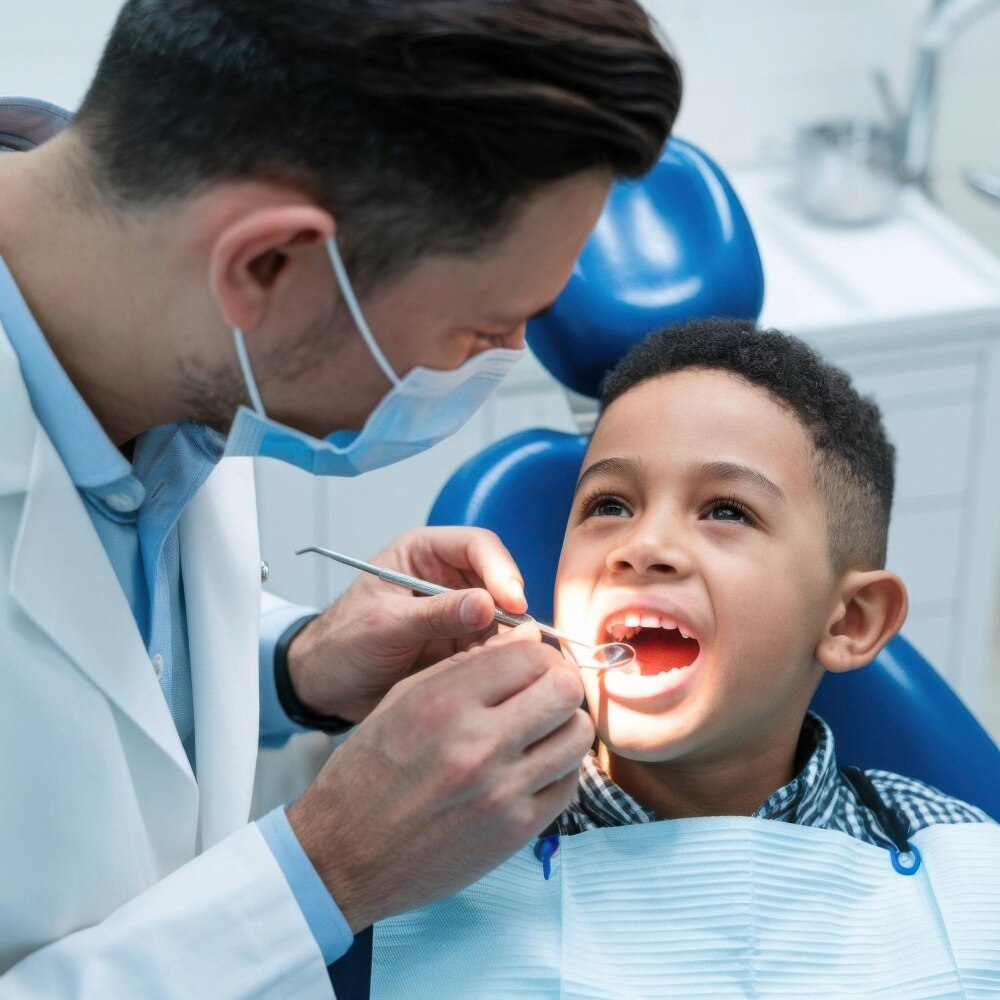
Tooth pain in a child can come from decay, an erupting tooth, an injury, gum infection, a bite problem, or pain referred from outside the mouth. A focused consultation helps identify the likely cause, decide whether an X-ray is needed, and match the child with monitoring, dental treatment, referral, or urgent care.
Key takeaways
- A consultation can identify decay, abscesses, trauma, eruption problems, and bite concerns.
- Pain location does not always reveal the tooth causing the problem.
- Dental X-rays help assess hidden decay, injuries, roots, and impacted teeth.
- Facial swelling, fever, or breathing difficulty needs same-day or emergency care.
Which tooth problems can a consultation identify?
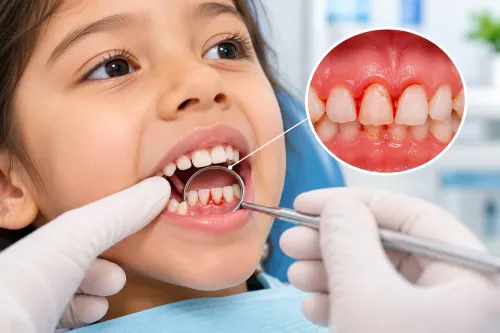
A kids dental consultation for tooth problems can identify far more than cavities. The dentist examines for early or advanced decay, enamel defects, gum swelling, a dental abscess, food trapped between teeth, loose baby teeth, erupting teeth, trauma, retained primary teeth, extra or impacted teeth, and bite-related problems.
The assessment also checks whether a baby tooth can be restored, whether infection has reached nearby tissues, and whether premature tooth loss could affect spacing. A white or brown mark does not automatically need a filling; its location, surface, progression, and the child’s decay risk guide the decision.
| Finding | What it may indicate | Possible next step |
|---|---|---|
| White or brown mark | Early enamel damage or active decay | Fluoride, plaque control, sealant, review, or restoration |
| Swelling or abscess | Infection in a tooth or surrounding tissue | Further assessment and treatment based on restorability |
| Delayed or abnormal eruption | Retained primary, extra, impacted, or ectopic tooth | Observation, radiograph, or orthodontic referral |
| Early tooth loss | Future spacing concern | Monitoring or discussion of space maintenance |
The dentist may also identify an eruption change that needs observation rather than immediate treatment. A child tooth problem dentist in Swargate is useful when the visible symptom does not explain the underlying problem, including pain caused by an ulcer, trauma, jaw-muscle strain, or referred sinus pain.
How does the dentist determine what is causing the pain?
During a children dental pain consultation, the dentist determines the likely source by building a timeline before examining the mouth. Tell them where the pain started, when it began, how long each episode lasts, and whether cold, sweets, biting, touch, or lying down triggers it.
1. Report night pain, fever, facial or gum swelling, reduced eating, difficulty sleeping, a recent fall or blow, and previous fillings, pulp treatment, or extractions.
2. The dentist checks each tooth, the gums, nearby soft tissues, bite, eruption pattern, and jaw movement. This helps distinguish decay, trauma, an erupting tooth, gum disease, and jaw-related pain.
3. If the child can cooperate and the result will help, the dentist may use gentle tapping or temperature testing. Pain that stops quickly after a stimulus differs from pain that lingers, begins without a trigger, occurs at night, or hurts on biting.
4. Symptoms alone cannot confirm the diagnosis. The examination also helps separate tooth pain from ear or sinus disease, jaw-muscle pain, an ulcer, soft-tissue injury, or other referred pain.
If the mouth does not explain the symptoms, medical assessment may be safer than unnecessary drilling or extraction.
When is a dental X-ray useful for a child?
A dental X-ray is useful when its result could change your child’s treatment, not simply because it is a routine visit. A pediatric dental assessment in Pune may include a radiograph when decay, infection, injury, or tooth development cannot be assessed fully by looking in the mouth.
- A bitewing X-ray shows decay between back teeth and helps reveal how deep a lesion extends.
- A periapical radiograph evaluates the area around a tooth root, including infection, a dental abscess, or injury.
- A panoramic radiograph gives a broad view of developing teeth, including unerupted, missing, extra, or displaced teeth.
The dentist weighs your child’s age, symptoms, examination findings, decay risk, previous images, and the exact area needing evaluation. A panoramic image is not the right answer to every question, and X-rays are not automatic at every appointment.
Ask what question the image will answer and whether an existing radiograph is recent enough to use. The dentist should choose the smallest useful examination and avoid imaging when the result will not alter care. That approach limits unnecessary exposure while still finding problems hidden between teeth, inside bone, or beneath the gum.
What treatment decisions can follow the consultation?
The next step after a kids dental consultation for tooth problems may be a review date, not immediate treatment. A stable eruption change, early enamel lesion, or symptom without a clear dental cause can be monitored while the dentist reassesses progression.
Treatment decisions can include:
- Early enamel damage: plaque-control instruction, diet changes, professionally applied fluoride, a sealant, and closer monitoring instead of a filling.
- A restorable cavity: a filling, with the material and approach matched to the tooth, lesion, and child’s cooperation.
- An inflamed or infected baby tooth: a pulpotomy, pulpectomy, extraction, or observation. The choice depends on restorability, root resorption, the child’s age, the permanent successor, and infection.
- Early extraction: discussion of a space maintainer or observation, because losing a primary tooth too soon can affect spacing.
- A bite or eruption concern: an orthodontic referral or planned review.
Antibiotics do not remove the source of a localized tooth infection. Drainage, pulp treatment, or extraction addresses that source; antibiotics enter the plan for fever, malaise, spreading swelling, or a relevant medical risk.
The dentist can also plan tell-show-do, distraction, breaks, nitrous oxide, sedation, or general anesthesia when treatment complexity and cooperation require it. These options require discussion of risks, alternatives, and monitoring.
What should you bring and discuss at the appointment?
Bring a written medication and symptom record rather than relying on memory. Include:
- Every medicine the child takes, with its strength and last dose; list allergies, important medical conditions, and recent injuries.
- Previous dental records, radiographs, and treatment notes. Add the date of any recent filling, extraction, or antibiotic course.
- A photograph of visible swelling if its size or appearance changes before the appointment.
- Pain details: location, triggers such as cold, sweets, biting, or touch, whether it lingers, night waking, eating changes, and fever.
- The child’s usual response to dental care, including distress, avoidance, or difficulty cooperating.
- What worries the child and which communication methods help, such as demonstrations, simple explanations, pauses, or distraction.
These details help the dentist build a safer, realistic plan and avoid repeating tests or treatments. Tell the clinic about facial swelling, fever, rapidly worsening symptoms, difficulty swallowing or breathing, or marked lethargy before travelling; those findings can require same-day dental care or emergency medical attention.
Chordiya Clinic can serve families seeking a child tooth problem dentist in Swargate and pediatric dental assessment in Pune, provided you confirm the appropriate urgency in advance.
Related service
Consultation Consultation we shall be addressing to your chief complaints and associated health related queries. |
Which warning signs require same-day or emergency care?
Facial swelling, fever with gum swelling, worsening pain with fever, a rapidly enlarging area, or unusual lethargy needs same-day dental or medical assessment. Do not wait for a routine children dental pain consultation if the child is becoming ill.
| Urgency | Warning signs | Action |
|---|---|---|
| Same day | Facial or gum swelling, fever, worsening pain with fever, rapid enlargement, unusual lethargy | Arrange dental or medical assessment |
| Emergency | Difficulty breathing or swallowing, neck or eye swelling, inability to open the mouth normally, uncontrolled bleeding | Go to emergency care |
| Urgent trauma care | Severe jaw or facial injury | Seek immediate evaluation |
A knocked-out permanent tooth needs urgent dental care. Hold it by the crown, never scrub the root, and keep it moist in milk or saline while travelling for help. Do not replant a knocked-out primary tooth; replantation can damage the developing permanent tooth.
A dental consultation can triage infection, but airway symptoms and serious facial trauma take priority. Do not give leftover antibiotics or wait to see whether swelling settles; antibiotics do not remove the source of a localized tooth infection, which may need drainage, pulp treatment, or extraction.
Frequently asked questions
Which tooth problems can a kids dental consultation identify?
A dentist can assess decay, enamel defects, gum swelling, abscesses, trapped food, loose baby teeth, erupting teeth, trauma, retained primary teeth, extra or impacted teeth, and bite problems.
How does a dentist determine what is causing a child’s tooth pain?
The dentist reviews when the pain started, what triggers it, and whether swelling or fever is present, then examines the teeth, gums, bite, and nearby tissues. X-rays can reveal problems hidden below the surface.
When is a dental X-ray useful for a child?
An X-ray is useful when the dentist needs to check for hidden decay, injury to a tooth or root, infection, retained baby teeth, extra teeth, or teeth blocked from erupting.
Which warning signs require same-day or emergency dental care?
Seek same-day care for facial or gum swelling, fever with tooth pain, pus, worsening pain, or difficulty opening the mouth. Get emergency help for breathing or swallowing difficulty, rapidly spreading swelling, or serious facial injury.
Keywords